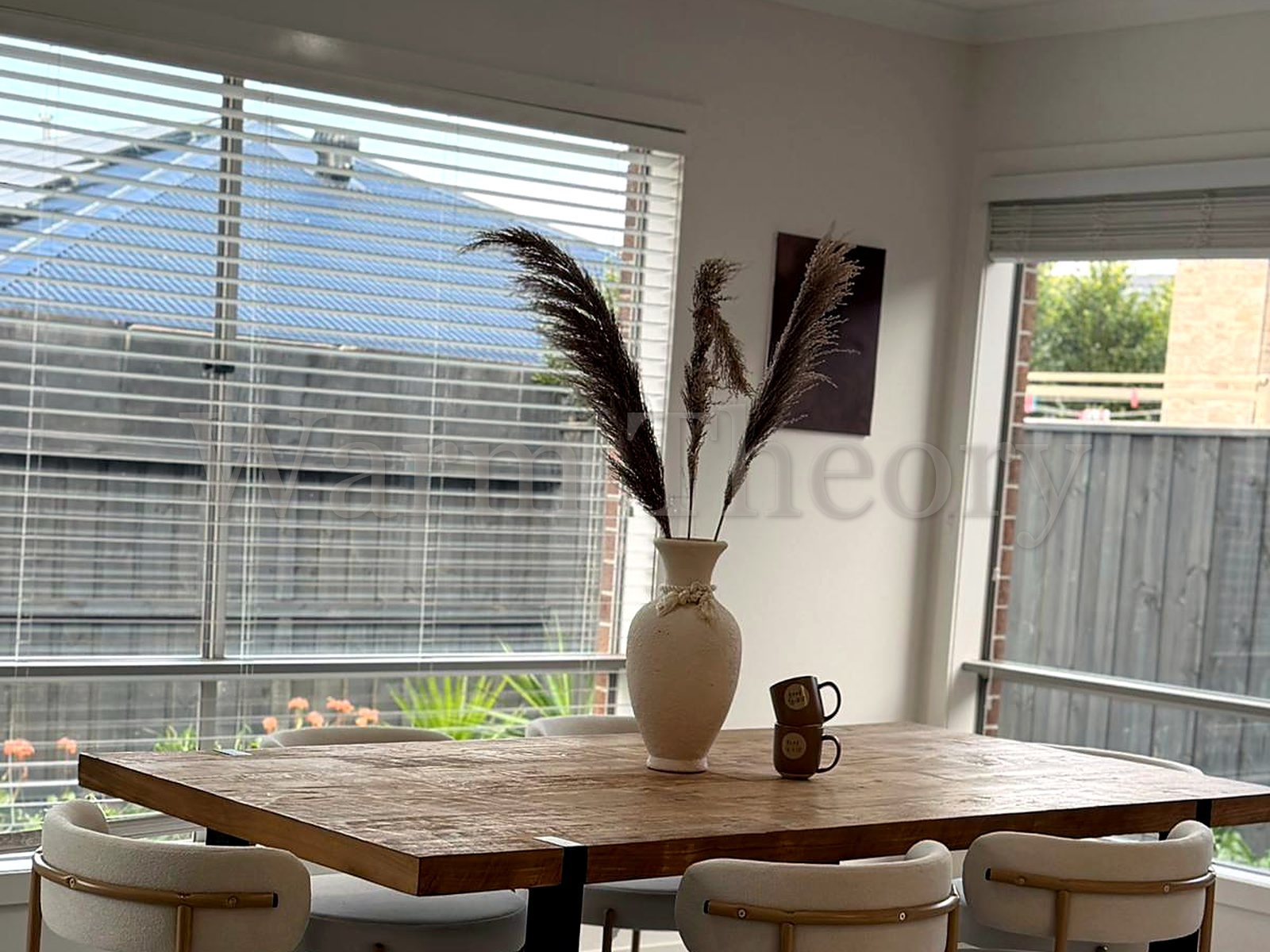
A room that looks styled rather than simply furnished usually comes down to a handful of repeatable decisions, not a bigger budget. From styling homes across Melbourne, I can tell you the difference between an amateur arrangement and a professional one is rarely the price of the sofa. It is proportion, layering, and light. Here are the ten habits our team uses on every project, whether it is a prestige auction campaign or a family living room that just needs to feel finished.
The short version
- Plan the layout around conversation and flow before you buy anything.
- Anchor every room with a rug, then layer texture, height and light.
- Work to a tight palette and let negative space do half the work.
- Style in odd-numbered groups and vary the heights.
1. Start with the layout, not the decor
Before a single cushion is chosen, professionals decide how a room is meant to be used and lived in. Float the furniture off the walls, angle seating so people can actually talk, and leave clear paths for walking through. In smaller Melbourne apartments this feels counterintuitive, but pulling a sofa 10 to 15 centimetres off the wall instantly makes a space read as considered rather than crammed.
2. Anchor the room with a rug that is big enough
The single most common mistake we correct is a rug that is too small. As a rule, the front legs of your main seating should sit on the rug, and in a larger living room all the legs should. A generous rug pulls the furniture into one composition. A postage-stamp rug makes everything around it float.
3. Layer texture before you reach for colour
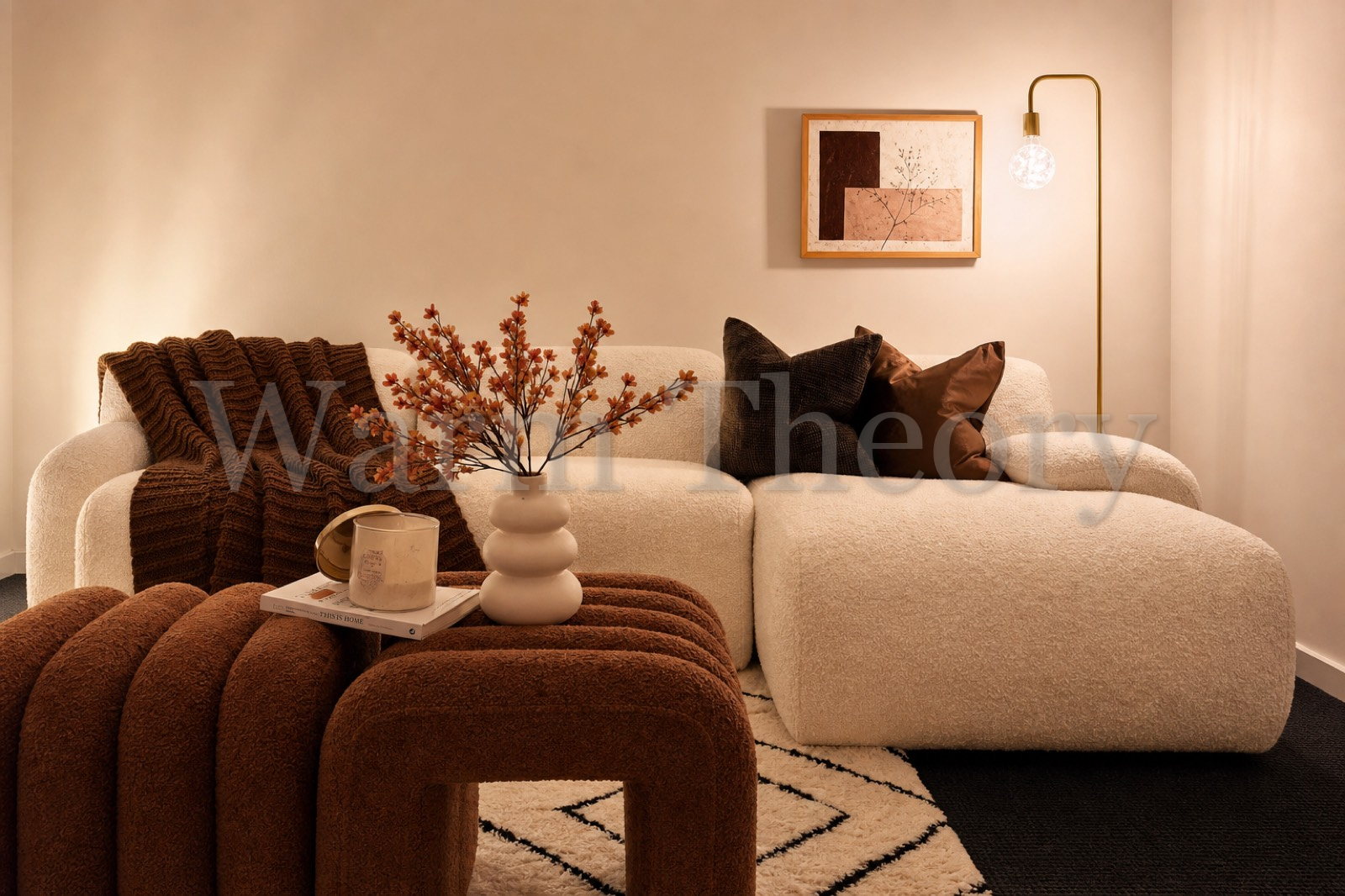
Warm, high-end rooms are built from contrast in texture: a boucle sofa, a linen cushion, a chunky knit throw, a timber side table, a ceramic lamp base. When the palette is restrained, texture is what stops a space from feeling flat. This is the heart of our house style and the reason our rooms photograph with depth even in a neutral scheme.
4. Work to a palette of three, plus a metal
Pick a dominant neutral, a secondary tone, and one accent, then repeat them around the room so the eye travels. Add a single metal finish (brass, black, or a warm nickel) and keep to it. A disciplined palette is the fastest way to make a mix of pieces look intentional rather than accidental.
5. Give every room three heights
Flat rooms feel unfinished. Draw the eye up and down with a floor lamp or tall branch, a mid-height lamp or artwork, and low objects on a coffee table or console. Height variation is one of those home styling tips that costs nothing and changes everything.
6. Style in odd numbers and triangles
Group objects in threes and fives, and arrange them so their tops form a soft triangle rather than a flat line. Vary the shapes too: something tall and linear, something round, something organic. It is the quiet grammar behind every shelf and coffee-table vignette that looks effortless.
7. Treat light as a material
Ceiling downlights alone make a home feel like an office. Add lamps at eye level and pools of warm light in the corners, and choose globes around 2700K for that golden, lived-in glow. In a home for sale this matters even more, because warm light is what makes a buyer slow down and linger.
8. Let negative space breathe
Knowing what to leave out is a professional skill. An empty stretch of bench, a bare corner, a shelf with room around each object: these give the eye somewhere to rest and make the pieces you do style feel deliberate. When in doubt, remove one thing.
9. Dress the bed and the windows properly
Two details read as instantly expensive: a well-layered bed (fitted sheet, flat sheet, a quilt or coverlet, two to four pillows, one throw) and curtains hung high and wide so they frame the window rather than choke it. Hang the rod close to the ceiling and let the fabric almost kiss the floor.
10. Edit, then edit again
The last step is subtraction. Clear the surfaces you do not need, hide the cables, straighten the shades, and remove anything that is purely personal. A styled home is a calm one, and calm is what lets a buyer or a guest imagine their own life in the space.
When to bring in a professional stylist
These tips will lift any room. But if you are preparing a property for sale, the stakes and the return are different, and a professional brings the furniture inventory, the trained eye and the campaign timeline that turn presentation into price. That is exactly what our home staging service is built for, and you can see the results across our portfolio. If you would like more selling-focused advice, read our guide to home styling tips to sell your home faster and our room-by-room checklist for preparing your home for sale.